Mouse Extermination
Full mouse extermination for Alaska homes: inspection, trapping, and sealing entry gaps down to 1/4 inch. Typical jobs run $150–$500 depending on infestation size and repairs.
Shed larva skins on a wool rug near a baseboard vent are usually the first clue, not the last. Alaska Pest Pros treats carpet beetle harborage in Alaska homes with targeted, crack-and-crevice applications and clear inspection findings. If you are finding shed skins or fecal spotting along baseboards, we can scope it.
Browse all service options available across Alaska and choose the right fit for your project.
Full mouse extermination for Alaska homes: inspection, trapping, and sealing entry gaps down to 1/4 inch. Typical jobs run $150–$500 depending on infestation size and repairs.
Rat Extermination for homes and commercial buildings includes inspection of access points and activity areas; scheduling around seasonal daylight and Soldotna conditions helps plan outdoor work.
Carpenter ant treatment for Juneau and Seward homes targets nest activity in wood; access to the nest and moisture damage affect the $200–$800 range. Near the Tony Knowles Coastal Trail, note damp exterior areas.
Full-room bed bug treatment for homes, rentals, and lodges inspection, targeted application, and follow-up visits, typically $500–$2,000 depending on rooms and method.
We track ant trails to the nest and treat with baits and crack-and-crevice applications; cost runs roughly $200–$800 depending on nest access and moisture damage.
We find and treat larvae sources, then apply a residual yard barrier so decks and patios stay usable. Pricing depends on acreage, water access, and visit count.
Wasp nest removal for rooflines, soffits, wall voids, and ground nests, priced $150-$500 depending on nest location and access. Serving Alaska homes and cabins.
Cockroach Treatment targets active harborage in kitchens and utility areas; jobs typically run $150–$600, depending on infestation severity and follow-up visits.
Spider Treatment for homes and rentals targets webs, harborage, and accessible cracks; typical jobs run $150–$400, depending on infestation size and access.
Flea Treatment targets indoor harborages in homes and rentals; a typical $200–$500 job depends on rooms and access. We coordinate across Alaska, including Kodiak and areas near Katmai National Park and Preserve and Ma...
Pantry Moth Treatment checks stored-food cupboards and nearby seams for activity; treatment scope and access determine the job cost.
We find and seal the gaps mice and rats use to enter Alaska homes foundations, siding, vents, and rooflines. Typical jobs run $300–$2,000 depending on openings, materials, and access.
Silverfish Treatment targets insects and harborage in bathrooms, utility areas, and cracks; typical jobs run $150–$400, with room count and access affecting cost.
Cluster fly treatment for attics, wall voids, and sunny window zones, timed before fall swarming. Cost depends on home size and how many voids we treat.
Removes squirrels from attics and walls, then seals entry points and cleans nesting debris; cost moves with roof access and how many openings need repair.
Pest Inspection documents activity, access points, and likely harborage in homes or commercial spaces; scope and price depend on property size and access.
Bird Control covers nest removal, vent and soffit exclusion, and droppings cleanup for Alaska homes and businesses. Cost depends on species, nest height, and access.
Bat Exclusion seals accessible roofline and siding entry points for homeowners and property managers; typical jobs may run $300–$1,500, depending on height and access.
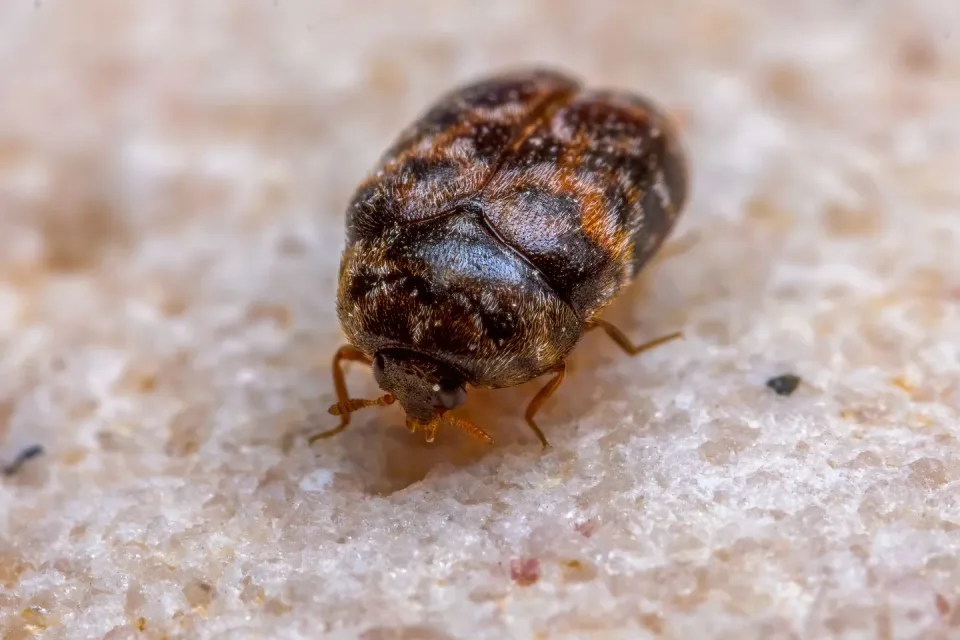
Carpet beetle treatment starts with pest identification larvae, shed skins, and fecal spotting get confirmed before any product is opened. We pull rug edges, check closet corners, and vacuum harborage areas first, because a residual insecticide does nothing against a source hidden inside a stored blanket box. Our applications follow EPA pesticide labels specify application directions for each product, every time.
Alaska adds its own wrinkle. Interior winters are colder and drier than the coast, so heated homes run hard all season and stored wool, furs, and mounted goods sit undisturbed for months near the Alaska Native Heritage Center collections standards you see modeled in Anchorage.
Guests flying into Fairbanks International Airport often carry the problem home in vintage rugs and secondhand furniture. Even in Barrow (Utqiaġvik), beetles survive fine indoors where it is warm.
Call (855) 681-0299 and we will walk the scope with you before we treat anything.
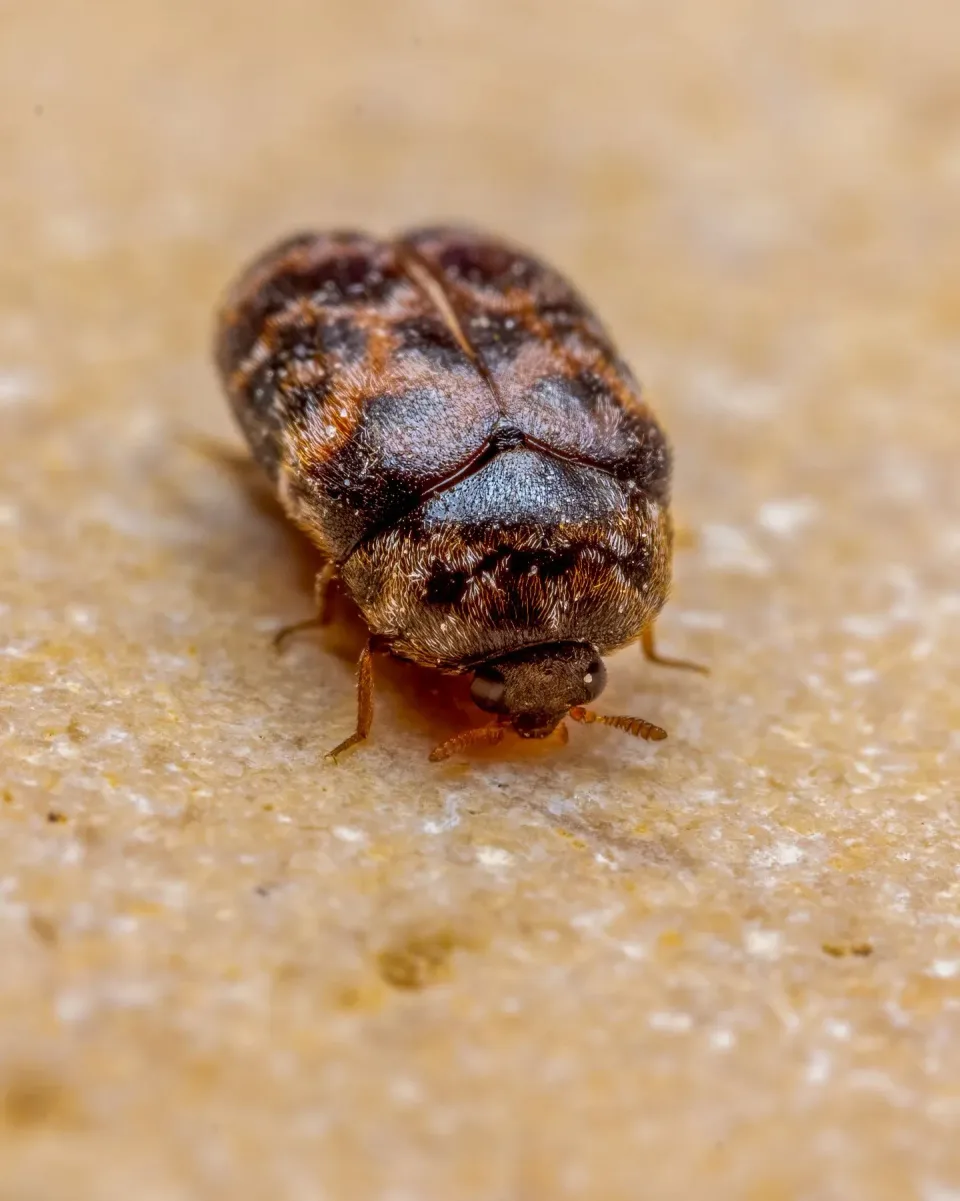
How does a carpet beetle treatment actually run from first call to follow-up? It starts with a source inspection. We identify the insect, map where larvae are feeding closets, baseboards, upholstery, stored textiles and confirm whether adults are entering from outside or breeding inside. Identification first; treating the wrong insect wastes a season.
Then prep and cleaning: vacuum harborage areas, launder washables on hot, clear closet floors so we can reach baseboard edges. Next, targeted crack-and-crevice application of a residual insecticide, placed per the EPA product label, with a written follow-up schedule beetle eggs and late-stage larvae survive the first pass.
Alaska’s winters shape how we do this work. Long, cold winters mean freeze protection matters in a way it doesn’t elsewhere: we often recommend freezing small infested items wool hats, silk scarves, a hand-knit sweater for at least a week at deep-freeze temperatures, which kills eggs and larvae without any chemical contact.
And because freeze-thaw cycles can open foundation and siding gaps, adults that seem to vanish each summer often return through cracks that widened over winter. We flag those entry points during inspection so sealing them becomes part of the plan, not an afterthought.
How do you fix a carpet beetle problem that keeps coming back after store-bought sprays? You stop treating where you see damage and start treating where larvae live. A fogged bedroom kills adults; two weeks later larvae emerge from a harborage the fog never reached.
A trained crew inspects to confirm the species, treats harborages directly with labeled crack-and-crevice products, and sets a follow-up schedule. In an Alaska winter, there’s a second reason DIY fails: snow accumulation can block vents and exterior access.
Vents buried under drifts trap lint and warmth ideal beetle harborage and they also hide the exterior entry points we need to inspect and treat. Digging out and clearing those accesses is part of a professional visit, and it’s the step most homeowners don’t know to take before spraying indoors.
Our applicators hold Alaska pesticide applicator certification under the Alaska Department of Environmental Conservation pesticide program. If DIY has failed twice, call us.
A homeowner finds larval damage on one area rug, gets a quote, and finds the neighbor paid double for the same-sounding problem. The difference is scope. Carpet beetle treatment in Alaska is priced on rooms treated, harborage access, and how many follow-up visits the life cycle demands not on square footage alone.
Typical ranges look like this:
Single-room treatment: roughly $200–$400 one bedroom or living area with a contained source, closet included.
Whole-home treatment: roughly $400–$800 multiple rooms, shared walls, and baseboard runs throughout.
Follow-up visits: often $100–$200 each needed because late-hatching larvae survive the first application.
Prevention add-ons: sealing gaps and storage consulting, priced by access and materials.
Location shapes cost too. Summer warmth can increase insect activity, and seasonal daylight changes affect outdoor service scheduling, so a June visit to Palmer may book differently than a dark February one. Access matters as well permafrost movement can shift foundations and open new entry points that add exclusion work.
Contact Alaska Pest Pros at (855) 681-0299 for a final quote matched to your actual scope.
Across pest control calls, the most common reasons people reach out are rodents, general pest control and ants.
A technician inspects the unit, confirms the pest before recommending anything, and walks the owner through the findings and a targeted treatment plan before work begins. The owner gets a clear scope in writing and a treatment plan matched to the building, with children and pets kept away from active treatment areas during service.
A technician identifies the exact pest species before selecting treatment, then targets the affected cupboards and points out which food items should be discarded and how to store the rest. The customer gets a straightforward plan to clear the infestation and secure food and pet bowls before any application, with follow-up available if activity recurs.
Ant trails at kitchen windows
Before: A steady line of ants moving along the kitchen window frame each morning, with the trail widening toward food areas and no clear idea where the colony is entering the house.
After: The technician identified the species, treated the trail and entry point, and the customer keeps baseboards clear and reports any returning activity during follow-up visits.
How much does carpet beetle treatment cost in Alaska?
Most carpet beetle treatments run about $200–$800, depending on how many rooms are involved, how accessible the harborage is, and whether follow-up visits are needed. Stored-textile cleanup and exclusion work add to the total. Contact Alaska Pest Pros for a quote matched to your actual scope rather than a guess over the phone.
Can carpet beetle treatment be combined with other pest control services?
Yes carpet beetles, clothes moths, and silverfish often share the same damp, lint-filled harborage areas, so a combined inspection makes sense. If we find moths emerging inside stored-food cupboards during the beetle inspection, we scope pantry moth treatment in the same visit. One coordinated Integrated Pest Management plan usually costs less than separate one-off treatments.
What should I do before scheduling carpet beetle treatment?
Vacuum harborage areas thoroughly, launder washable wool and cotton items on hot, and clear closet floors and rug edges so baseboards are reachable. Snap photos of any shed skins, fecal spotting, or feeding damage before you clean they help us confirm pest identification. Note where you first saw damage; larvae usually feed within a few feet of it.
Do carpet beetle treatments require follow-up visits?
Yes beetle life cycles stretch over months, so eggs and late-stage larvae often survive the first application and hatch afterward. We schedule follow-up inspections to catch new activity and recheck harborage points. EPA pesticide labels specify application directions and reentry intervals, and we follow both on every revisit.
Are the products used for carpet beetle treatment regulated in Alaska?
Yes under the Federal Insecticide, Fungicide, and Rodenticide Act, all pesticide use must follow EPA-approved product labels, and applicators in Alaska need certification under AS 46.03.320 and 18 AAC 90 through the Alaska Department of Environmental Conservation. Alaska Pest Pros applies only registered products per label directions and provides Safety Data Sheet information on request.
Reach our Alaska team or ask about coverage in other markets.
Most carpet beetle treatments run about $200–$800, depending on how many rooms are involved, how accessible the harborage is, and whether follow-up visits are needed. Stored-textile cleanup and exclusion work add to the total. Contact Alaska Pest Pros for a quote matched to your actual scope rather than a guess over the phone.
Yes carpet beetles, clothes moths, and silverfish often share the same damp, lint-filled harborage areas, so a combined inspection makes sense. If we find moths emerging inside stored-food cupboards during the beetle inspection, we scope pantry moth treatment in the same visit. One coordinated Integrated Pest Management plan usually costs less than separate one-off treatments.
Vacuum harborage areas thoroughly, launder washable wool and cotton items on hot, and clear closet floors and rug edges so baseboards are reachable. Snap photos of any shed skins, fecal spotting, or feeding damage before you clean they help us confirm pest identification. Note where you first saw damage; larvae usually feed within a few feet of it.
Yes beetle life cycles stretch over months, so eggs and late-stage larvae often survive the first application and hatch afterward. We schedule follow-up inspections to catch new activity and recheck harborage points. EPA pesticide labels specify application directions and reentry intervals, and we follow both on every revisit.
Yes under the Federal Insecticide, Fungicide, and Rodenticide Act, all pesticide use must follow EPA-approved product labels, and applicators in Alaska need certification under AS 46.03.320 and 18 AAC 90 through the Alaska Department of Environmental Conservation. Alaska Pest Pros applies only registered products per label directions and provides Safety Data Sheet information on request.
Select a city to find local pest control providers we cover in Alaska.