Mouse Extermination
Full mouse extermination for Alaska homes: inspection, trapping, and sealing entry gaps down to 1/4 inch. Typical jobs run $150–$500 depending on infestation size and repairs.
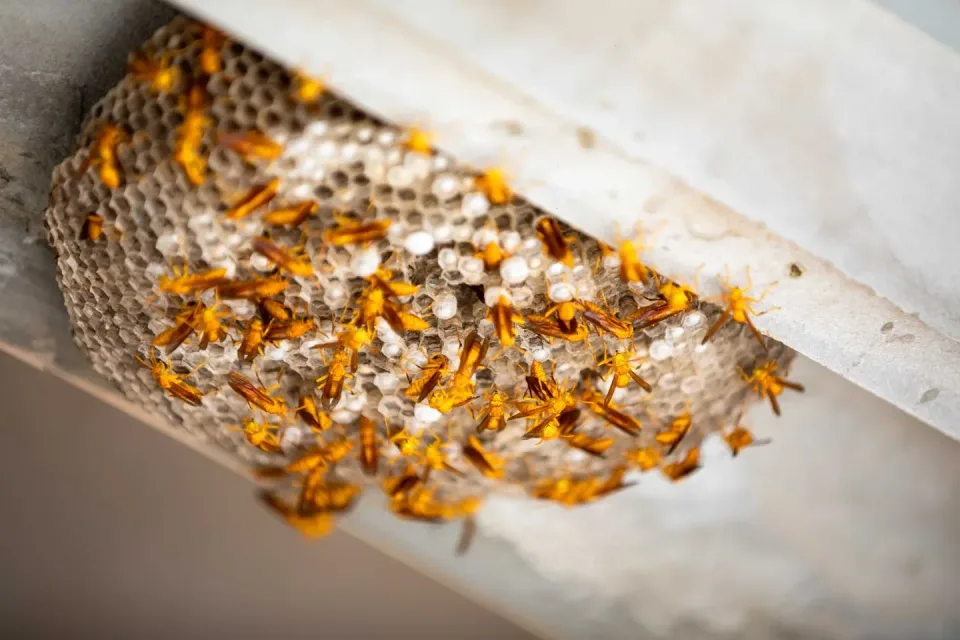
Wasps slipping through a roof gap can mean the nest is tucked behind eaves, where reaching it may disturb insects you cannot see. Professional removal is safer when the nest is hidden, high, or close to an occupied entryway. A nest visible from the ground is not automatically safe to approach; don’t spray into a roof opening or climb to investigate.
Alaska’s short growing season makes outdoor insect activity seasonal, but a sheltered roof cavity can still need attention. We inspect eaves and access conditions before recommending wasp nest removal from house eaves in Anchorage.
If your call is really about arranging a bed bug heat-treatment inspection or asking someone to spray for bed bugs, explain that clearly so the appointment addresses the right pest and treatment. Ask what the inspection includes.
Wasps entering through roof gaps are a reason to keep people away from the opening, not to seal it immediately. Call a professional if the nest is concealed, elevated, or near regular foot traffic. Blocking an active entrance can redirect wasps into the building, so the nest and its route need assessment first.
Our crew checks the roof edge from a safe position and explains whether removal or another step fits the conditions. In Anchorage, freeze-thaw cycles can open foundation and siding gaps; after the wasps are addressed, inspect nearby exterior seams rather than assuming one visible opening is the only route. A small gap can hide a larger cavity.
A small, exposed nest within easy reach may appear manageable, but DIY treatment is a poor choice when wasps disappear behind fascia or roof sheathing. Don’t climb a ladder, pry open siding, or direct a spray into an unseen cavity.
The failure we see repeatedly is treating the entrance without confirming where the colony sits. A careful building-envelope check helps distinguish a nest entrance from a gap that needs repair.
If the roofline is high or the flight path crosses a doorway, keep people clear and request an inspection. We handle wasp removal by assessing access and activity before choosing a treatment, not by guessing from the ground.
Older and varied building details, including those around the Anchorage Downtown Historic District, can make roofline access and gap inspection less straightforward. At the Anchorage Museum, the recognizable city setting offers a reminder that Anchorage buildings differ in age and exterior design; a crew should inspect the actual property rather than assume one roof detail fits all.
Roof snowmelt can increase crawlspace moisture, so note damp areas or water paths while looking over the exterior but don’t enter a risky roof space to investigate. Wind-driven rain can expose gaps around doors and windows, too.
These conditions may point to maintenance needs beyond the wasp entrance, which is why we explain findings separately from the nest treatment.
Choose professional help when the colony is concealed in a roof void, the entrance is above a ladder-safe reach, or residents cannot avoid the flight path. A mouse exterminator in Anchorage, AK handles a different pest problem; rodent work may include mouse removal and entry-point sealing, but it is not a substitute for wasp nest removal.
If you have both concerns, describe each symptom when you schedule. Our 11+ years serving Alaska inform how we plan around occupied buildings and local weather.
For related information, read our guide to wasps entering through Anchorage roof gaps or review what scratching in Anchorage walls at night can reveal about rodents. Keep the immediate area clear while you wait.
If wasps vanish behind an eave instead of clustering on an exposed surface, the safest option depends on confirmed pest activity and access. Use the distinctions below to ask focused questions.
| Option | Best for | Key detail |
|---|---|---|
| Preventive pest inspection | Uncertain roofline activity | Identifies activity before treatment is selected |
| Insecticide application | Confirmed insects requiring treatment | A written plan should specify the treatment area in square feet |
| Bed bug heat treatment | A separate, confirmed bed bug problem | Heat treatment is distinct from wasp control |
| Exterior perimeter treatment | Confirmed exterior pest activity | Freeze-thaw cycles can reopen foundation and siding gaps |
An EPA-registered pesticide selection should match the identified pest and intended use; ask which product and label directions apply. DDT’s insecticidal properties were discovered by Paul Hermann Müller in 1939, but that history is not a recommendation for present-day use. Request a written treatment plan describing the wasp nest, access, and proposed work.
First, describe where wasps enter and whether anyone has seen them inside; don’t open the roof cavity to check. Identify attic access points for the crew, but leave sealed or unsafe spaces unopened.
Protecting finished interiors matters when access or treatment may affect nearby rooms. For a different pest concern, bed bug heat treatment and chemical treatment use different approaches, so don’t assume the preparation for one applies to wasps.
Our team coordinates follow-up based on findings and keeps the agreed access route clear. Anchorage daylight changes can affect outdoor scheduling; ask what site access will be needed before the appointment.
FAQ section
If wasps keep appearing indoors after roof-gap treatment, report where and when you see them so the entry route can be reassessed. Building-envelope gap inspection helps identify whether activity is coming through another opening rather than the treated access point.
Wasp nest removal is listed at $150–$500; nest location and access affect the estimate, especially when the colony is behind a high roof edge. Ask Alaska Pest Pros to assess the access and explain the quote before work begins.
Call a professional if wasps enter a concealed roof cavity, the nest is high, or the flight path puts people at risk. Alaska Pest Pros can inspect the access and discuss a practical treatment plan rather than having you disturb an unseen colony.
Yes, pesticide use must follow EPA-approved product labels, including their application and reentry directions. Alaska pesticide applicator licensing is addressed under AS 46.03.320, and state pesticide regulations include 18 AAC 90.
Yes, a Pest Inspection can assess visible entry points as well as the reported wasp activity, helping separate the nest entrance from other exterior openings. In Anchorage, coastal communities can experience damp, windy conditions, so describe recurring indoor activity and any exterior gaps you have noticed.
If wasps keep entering through a roof gap, avoid sealing or spraying into the opening before the nest location is assessed. A concealed or hard-to-reach colony is a good reason to request professional wasp nest removal. Alaska Pest Pros serves Anchorage and can arrange an inspection that includes a careful entry-point assessment, so you know what the crew found and what the next step involves.
Whether you’re near Ted Stevens Anchorage International Airport or the University of Alaska Anchorage, seasonal daylight changes can shape safe outdoor service scheduling. Don’t wait for a convenient moment to climb a ladder.
Describe the entry point and any indoor activity, then request a quote through our Wasp Nest Removal service.
If wasps keep appearing indoors after roof-gap treatment, report where and when you see them so the entry route can be reassessed. Building-envelope gap inspection helps identify whether activity is coming through another opening rather than the treated access point.
Wasp nest removal is listed at $150–$500; nest location and access affect the estimate, especially when the colony is behind a high roof edge. Ask Alaska Pest Pros to assess the access and explain the quote before work begins.
Call a professional if wasps enter a concealed roof cavity, the nest is high, or the flight path puts people at risk. Alaska Pest Pros can inspect the access and discuss a practical treatment plan rather than having you disturb an unseen colony.
Yes, pesticide use must follow EPA-approved product labels, including their application and reentry directions. Alaska pesticide applicator licensing is addressed under AS 46.03.320, and state pesticide regulations include 18 AAC 90.
Yes, a Pest Inspection can assess visible entry points as well as the reported wasp activity, helping separate the nest entrance from other exterior openings. In Anchorage, coastal communities can experience damp, windy conditions, so describe recurring indoor activity and any exterior gaps you have noticed.
Browse all nationwide service options and choose the right fit for your project.
Full mouse extermination for Alaska homes: inspection, trapping, and sealing entry gaps down to 1/4 inch. Typical jobs run $150–$500 depending on infestation size and repairs.
Rat Extermination for homes and commercial buildings includes inspection of access points and activity areas; scheduling around seasonal daylight and Soldotna conditions helps plan outdoor work.
Carpenter ant treatment for Juneau and Seward homes targets nest activity in wood; access to the nest and moisture damage affect the $200–$800 range. Near the Tony Knowles Coastal Trail, note damp exterior areas.
Full-room bed bug treatment for homes, rentals, and lodges inspection, targeted application, and follow-up visits, typically $500–$2,000 depending on rooms and method.
We track ant trails to the nest and treat with baits and crack-and-crevice applications; cost runs roughly $200–$800 depending on nest access and moisture damage.
We find and treat larvae sources, then apply a residual yard barrier so decks and patios stay usable. Pricing depends on acreage, water access, and visit count.
Wasp nest removal for rooflines, soffits, wall voids, and ground nests, priced $150-$500 depending on nest location and access. Serving Alaska homes and cabins.
Cockroach Treatment targets active harborage in kitchens and utility areas; jobs typically run $150–$600, depending on infestation severity and follow-up visits.
Spider Treatment for homes and rentals targets webs, harborage, and accessible cracks; typical jobs run $150–$400, depending on infestation size and access.
Flea Treatment targets indoor harborages in homes and rentals; a typical $200–$500 job depends on rooms and access. We coordinate across Alaska, including Kodiak and areas near Katmai National Park and Preserve and Ma...
Pantry Moth Treatment checks stored-food cupboards and nearby seams for activity; treatment scope and access determine the job cost.
We find and seal the gaps mice and rats use to enter Alaska homes foundations, siding, vents, and rooflines. Typical jobs run $300–$2,000 depending on openings, materials, and access.
Silverfish Treatment targets insects and harborage in bathrooms, utility areas, and cracks; typical jobs run $150–$400, with room count and access affecting cost.
Cluster fly treatment for attics, wall voids, and sunny window zones, timed before fall swarming. Cost depends on home size and how many voids we treat.
Removes squirrels from attics and walls, then seals entry points and cleans nesting debris; cost moves with roof access and how many openings need repair.
Carpet beetle treatment for Alaska homes: inspection of rug edges, closets, and baseboard harborage, targeted residual application, follow-up checks. Typically $200–$600 depending on rooms and source.
Pest Inspection documents activity, access points, and likely harborage in homes or commercial spaces; scope and price depend on property size and access.
Bird Control covers nest removal, vent and soffit exclusion, and droppings cleanup for Alaska homes and businesses. Cost depends on species, nest height, and access.
Bat Exclusion seals accessible roofline and siding entry points for homeowners and property managers; typical jobs may run $300–$1,500, depending on height and access.
Select a city to find local pest control providers we cover in Alaska.
Share your job scope for pest control in Alaska — we will review fit and pricing before scheduling.