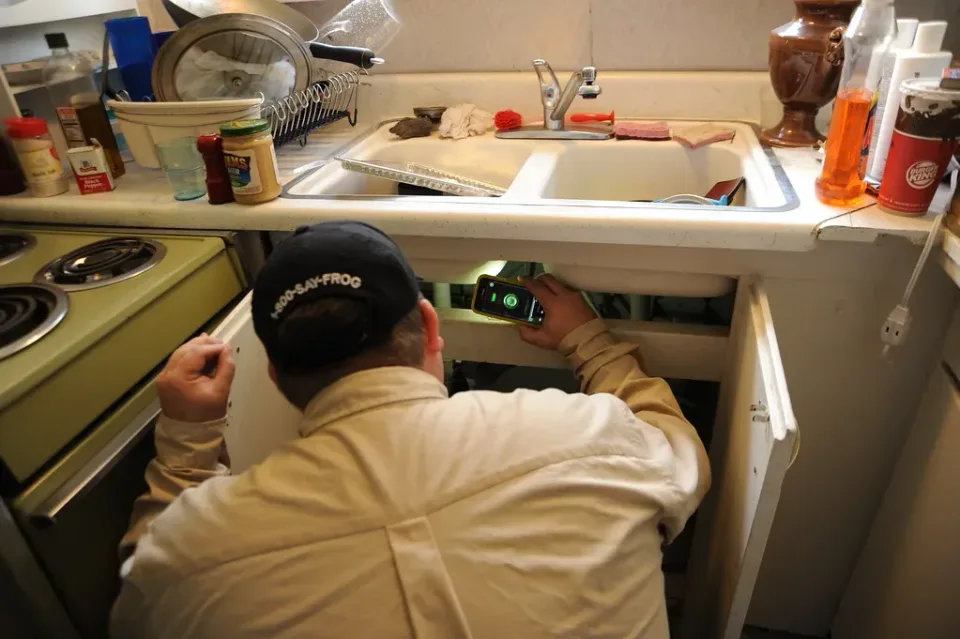
Mouse Extermination
Full mouse extermination for Alaska homes: inspection, trapping, and sealing entry gaps down to 1/4 inch. Typical jobs run $150–$500 depending on infestation size and repairs.
Moths emerging inside stored-food cupboards usually point to an infested food package, so inspect dry goods before treating the room. Check seams, corners, and shelf pinholes where crumbs or webbing can go unnoticed.
A glue board can help show where adult moths are active, but it will not remove the food source or stop new moths from emerging. Keep the board away from food and follow its placement directions.
In Alaska, long, cold winters make indoor pantry storage important, while the Anchorage Museum offers a familiar local landmark for readers across the region. If you have a mouse problem that needs help, report the actual signs rather than assuming moths and rodents share one cause; if you want somebody to come out and kill them, clarify which pest you have first.
Start with packages that have been open longest, then check flour, cereal, rice, nuts, dried fruit, pet food, and birdseed. Look for fine webbing, clumped particles, larvae, or small holes in packaging; a sealed-looking bag can still have a compromised seam.
Move each suspect item away from other foods before examining it. Do not pour questionable contents into another container, because that can spread hidden larvae or eggs.
We advise checking the shelf corners and the folds of paper packaging before wiping everything down. A frequent miss is the forgotten bag at the back of a high shelf.
Discard infested goods in a securely closed bag, and clean crumbs from joints and shelf supports. The short growing season across much of Alaska does not prevent pantry moths from developing indoors where stored food is available.
One adult moth is a clue, not proof that every cupboard is infested. Follow where you see repeated activity, then inspect nearby packages and the underside of shelf edges. Adult moths may gather away from the food where larvae developed, so spraying the visible moth alone can leave the source untouched.
Do not mistake other pest evidence for pantry moth signs. Carpenter ants in Alaska are identified by their size and shape, but an ant sighting calls for a different inspection than webbing or larvae in dry food.
A historical note can help explain why old pesticide advice should be treated cautiously: the United States banned most DDT uses in 1972. We focus on current evidence and the pest actually present, not an old remedy passed along by a neighbor.
If you find one clearly infested package and no further signs after removing it and cleaning the shelf, monitor the cupboard and inspect nearby food before buying pesticides. Repeated moth sightings, larvae in several packages, or activity returning after cleaning are good reasons to request a professional inspection. We document what we find and explain a targeted plan rather than treating every cupboard by default.
An unrelated insect problem can complicate the picture. For example, preventing wasps from nesting under eaves means addressing exterior shelter opportunities; it does not resolve moths breeding in stored food.
The Alaska State Capitol is a recognizable Juneau landmark, but buildings across Alaska still need pest decisions based on their own evidence and conditions. Alaska Pest Pros can help identify pantry activity and explain what to do next.
We begin by asking where and when moths appear, then inspect accessible stored foods and cupboard surfaces for evidence that points to a source. Keep suspect packages available for identification if practical, and note which shelves show recurring activity. Do not apply an insecticide to food or food-contact surfaces unless its label specifically permits that use.
A good inspection separates a confirmed source from a guess. We explain findings in plain terms and discuss practical prevention, including tighter food storage and routine checks of dry goods.
If the source is not apparent, monitoring can help show whether activity continues and where to focus the next inspection. That is more useful than treating the whole kitchen simply because an adult moth was spotted.
If you see one moth but cannot find damaged food, first decide whether you need monitoring or a source inspection. The right choice depends on what the evidence shows.
| Option | Best for | Key detail |
|---|---|---|
| Glue board | Tracking adult moth activity | Bait station footprint is model-dependent; board size and placement vary by model |
| Food-package inspection | Finding a likely pantry source | Check each package and record which shelf showed signs |
| Targeted crack-and-crevice application | Confirmed activity in an appropriate gap | A professional can focus treatment where evidence supports it |
| Insecticide application | A treatment plan that calls for a product | Follow the product directions and keep it away from food unless the label allows use there |
Rodent entry-point documentation and rodent exclusion address a separate rodent problem, not pantry moths. After any treatment, ask what post-treatment monitoring is recommended and what signs should prompt another inspection.
Note the activity: Write down where and when you see moths so the inspection can focus on a pattern rather than one sighting.
Separate suspect food: Set questionable packages aside without transferring their contents to clean containers.
Clear the cupboards: Remove items from shelves you want inspected, and leave food securely closed and away from the work area.
Secure pets: Keep pets out of the interior treatment area if treatment is planned, and ask what access the technician needs.
Share prior pesticide use: Tell the inspector what product was used and where, so the findings and next steps account for it.
Ask about access: Identify the pantry and any adjacent storage spaces that may need inspection; clear access beneath sinks and appliances if requested.
Follow the plan: If treatment is recommended, follow the product-label re-entry interval and the technician’s specific preparation instructions.
FAQ section
If pantry moths return after you discard suspect food, inspect every nearby dry-good package and the cupboard seams for overlooked activity. A recurring pattern can mean another food source remains, so note where moths appear and consider a focused inspection.
There is no assigned pantry moth price in this guide, so ask for an estimate based on the confirmed source, affected storage areas, and treatment plan. For context, carpenter ant treatment is listed at $200–$800, with nest access and moisture damage affecting the work; that is a different pest and not a pantry moth quote.
Call a professional if moths keep emerging after you remove suspect food, or if you cannot locate the source after checking nearby packages. Alaska Pest Pros can inspect the evidence and explain whether a targeted plan is warranted rather than recommending a product without identifying the pest.
Yes, FIFRA requires pesticide use to follow EPA-approved product labels, including application and re-entry directions. Alaska pesticide applicator licensing is addressed under AS 46.03.320, and state pesticide regulations include 18 AAC 90.
Pantry moths in stored food do not by themselves mean you need another pest service, but separate signs should be assessed on their own. If mouse droppings near pantry shelves are also present, ask whether Rodent Exclusion is appropriate; cold snaps may drive rodents indoors in Alaska.
If moths keep appearing after you remove suspect food and clean the shelf, the source may be tucked into another package or cupboard. Ask for an inspection before applying a product.
Advion is a product name people may encounter in pest-control discussions, but a product should not be chosen by name alone; the label and the confirmed pest matter. Alaska pesticide applicator licensing requirements are part of responsible treatment, and our crew explains the inspection findings and proposed work before proceeding.
A backpack sprayer is application equipment, not a treatment plan by itself. Contact Alaska Pest Pros to discuss pantry moth activity and request a practical next step through our Pantry Moth Treatment page.
If pantry moths return after you discard suspect food, inspect every nearby dry-good package and the cupboard seams for overlooked activity. A recurring pattern can mean another food source remains, so note where moths appear and consider a focused inspection.
There is no assigned pantry moth price in this guide, so ask for an estimate based on the confirmed source, affected storage areas, and treatment plan. For context, carpenter ant treatment is listed at $200–$800, with nest access and moisture damage affecting the work; that is a different pest and not a pantry moth quote.
Call a professional if moths keep emerging after you remove suspect food, or if you cannot locate the source after checking nearby packages. Alaska Pest Pros can inspect the evidence and explain whether a targeted plan is warranted rather than recommending a product without identifying the pest.
Yes, FIFRA requires pesticide use to follow EPA-approved product labels, including application and re-entry directions. Alaska pesticide applicator licensing is addressed under AS 46.03.320, and state pesticide regulations include 18 AAC 90.
Pantry moths in stored food do not by themselves mean you need another pest service, but separate signs should be assessed on their own. If mouse droppings near pantry shelves are also present, ask whether Rodent Exclusion is appropriate; cold snaps may drive rodents indoors in Alaska.
Browse all nationwide service options and choose the right fit for your project.
Full mouse extermination for Alaska homes: inspection, trapping, and sealing entry gaps down to 1/4 inch. Typical jobs run $150–$500 depending on infestation size and repairs.
Rat Extermination for homes and commercial buildings includes inspection of access points and activity areas; scheduling around seasonal daylight and Soldotna conditions helps plan outdoor work.
Carpenter ant treatment for Juneau and Seward homes targets nest activity in wood; access to the nest and moisture damage affect the $200–$800 range. Near the Tony Knowles Coastal Trail, note damp exterior areas.
Full-room bed bug treatment for homes, rentals, and lodges inspection, targeted application, and follow-up visits, typically $500–$2,000 depending on rooms and method.
We track ant trails to the nest and treat with baits and crack-and-crevice applications; cost runs roughly $200–$800 depending on nest access and moisture damage.
We find and treat larvae sources, then apply a residual yard barrier so decks and patios stay usable. Pricing depends on acreage, water access, and visit count.
Wasp nest removal for rooflines, soffits, wall voids, and ground nests, priced $150-$500 depending on nest location and access. Serving Alaska homes and cabins.
Cockroach Treatment targets active harborage in kitchens and utility areas; jobs typically run $150–$600, depending on infestation severity and follow-up visits.
Spider Treatment for homes and rentals targets webs, harborage, and accessible cracks; typical jobs run $150–$400, depending on infestation size and access.
Flea Treatment targets indoor harborages in homes and rentals; a typical $200–$500 job depends on rooms and access. We coordinate across Alaska, including Kodiak and areas near Katmai National Park and Preserve and Ma...
Pantry Moth Treatment checks stored-food cupboards and nearby seams for activity; treatment scope and access determine the job cost.
We find and seal the gaps mice and rats use to enter Alaska homes foundations, siding, vents, and rooflines. Typical jobs run $300–$2,000 depending on openings, materials, and access.
Silverfish Treatment targets insects and harborage in bathrooms, utility areas, and cracks; typical jobs run $150–$400, with room count and access affecting cost.
Cluster fly treatment for attics, wall voids, and sunny window zones, timed before fall swarming. Cost depends on home size and how many voids we treat.
Removes squirrels from attics and walls, then seals entry points and cleans nesting debris; cost moves with roof access and how many openings need repair.
Carpet beetle treatment for Alaska homes: inspection of rug edges, closets, and baseboard harborage, targeted residual application, follow-up checks. Typically $200–$600 depending on rooms and source.
Pest Inspection documents activity, access points, and likely harborage in homes or commercial spaces; scope and price depend on property size and access.
Bird Control covers nest removal, vent and soffit exclusion, and droppings cleanup for Alaska homes and businesses. Cost depends on species, nest height, and access.
Bat Exclusion seals accessible roofline and siding entry points for homeowners and property managers; typical jobs may run $300–$1,500, depending on height and access.
Select a city to find local pest control providers we cover in Alaska.
Share your job scope for pest control in Alaska — we will review fit and pricing before scheduling.